
Trusted UK Casinos in 2026: Reading the Register Before You Deposit
 Available in GB
Trust in a British online casino starts in one place — the Gambling Commission’s public register. A current entry on that register is the only fact that proves a brand may legally take your money; everything else, from bonus size to game count, is decoration. On 18 September 2026 that register listed 139 businesses holding an active remote casino operating licence, with 1065 active and 361 white-label domains between them, and any brand in this article appears there too. Below the surface, however, the rules that govern how those licences behave have shifted sharply: stake caps, deposit prompts, vulnerability checks, a 10x wagering ceiling and a credit-card ban all sit on top of the licence like layers of paint, and each one changes what a “trusted” site actually costs the person playing on it.
Data current as of 23 September 2026; figures cross-checked against the Gambling Commission’s public register and operator-published terms.
Table of Contents
- What “Trusted” Actually Means Under a British Licence
- The Legal Frame Around a British Casino
- Wellbeing Protections and How They Show Up on a Licensed Site
- How the Ten Brands Compare on the Things the Register Actually Shows
- Reading a Licence Number Without Taking Anyone’s Word for It
- Frequently Asked Questions
What “Trusted” Actually Means Under a British Licence
Trust is a word the marketing department spends a lot of time on. Under the Gambling Act 2005 and the Gambling (Licensing and Advertising) Act 2014, it has a narrower meaning: a brand is trusted in the UK when it holds a current operating licence from the Gambling Commission, when it has passed the Commission’s fit-and-proper test for the company behind it, and when it operates every product it offers to British customers under that licence rather than under a parallel licence from somewhere else. The Commission’s published register is the only place a player needs to look to confirm any of this.
A licence number on the register follows a fixed pattern — the operator’s six-digit account number, then “-R-”, then a six-digit licence code, then a two-digit suffix (for example, Betway’s licence reads 039372-R-319367-029). The leading six digits are the account number of the licensee; the “R” marks a remote, i.e. online, licence; the suffix changes when the licence is renewed. Anyone can search the register by domain name, company name or licence number, and the Commission publishes the full file as a CSV download. That download is the raw material of this article, and it is also the raw material any reader can use to check a brand before depositing.

The licence itself is a starting line, not a finishing one. A Commission licence obliges the operator to verify name, address and date of birth before the first deposit or any play, to participate in the national GAMSTOP self-exclusion scheme, to apply safer-gambling prompts and to honour financial-vulnerability checks. It also subjects the operator to social responsibility codes and Licence Conditions and Codes of Practice (LCCP), which are audited and enforced. A brand that meets none of these cannot legally be called trusted in the British market; a brand that meets all of them is, by definition, a Commission licensee and a participant in every protection the Act lays down.
The Landscape on the Register
Two figures frame the size of the licensed market. The Commission’s remote operating-licence list ran to 139 active businesses on 18 September 2026, and the associated domain list held 1065 active and 361 white-label entries on the same date. A white-label site is a domain that trades under another company’s licence — the licensee takes regulatory responsibility, and the white-label partner takes the customer-facing brand. White-labelling is not a sign of distrust in itself, but it does mean the brand on the page may not be the company the Commission has approved; the register shows both.

That 139-business figure is not the number of casinos a player can choose from. Many of those account numbers belong to sportsbooks, lotteries, bingo-only operators or holding companies. The actual number of casinos worth a player’s attention is smaller, and it is even smaller once duplicate licences are netted out — Ladbrokes, Coral and Gala Bingo all sit under LC International Limited, so three well-known brands share a single regulatory entry.
The Limits That Apply to Every Commission Licence
Several rules apply to every GB-licensed casino and to no offshore casino. They are worth knowing because they shape what a “trusted” site will and will not let a player do.
Maximum stake per game cycle on online slots is £5 for players aged 25 and over, in force from 9 April 2025, and £2 for players aged 18 to 24, in force from 21 May 2025. The cap is per spin, not per session, and it cannot be raised. There is no statutory deposit or loss ceiling; instead, every operator must prompt a customer to set a financial limit before the first deposit can be made, in force from 31 October 2025. Auto-play has been banned since 31 October 2021; the minimum interval between slot spins is 2.5 seconds; losses disguised as wins — slot animations that celebrate a payout smaller than the wager — are not permitted in any UI.
These are not optional. They are written into the LCCP and enforced through licence reviews and financial penalties. A site that quietly allows a £20 spin, that runs slots in fast mode, that lets a player skip the financial-limit prompt, or that celebrates a £1 win on a £5 spin with confetti is not a Commission site in good standing, regardless of what its licence page claims.
The Legal Frame Around a British Casino
The Gambling Commission sits inside the Department for Culture, Media and Sport’s sponsorship and derives its powers from the Gambling Act 2005, which covers Great Britain — England, Scotland and Wales — and from the 2014 Act that ended the previous offshore-only regime. Northern Ireland runs a separate licensing system under older legislation and is not part of the GB regime described here. Since the 2014 Act any operator taking deposits from customers in Great Britain needs a Commission licence regardless of where the company itself is incorporated.
The Commission’s enforcement powers are broad but stop at the border. It can issue cease-and-desist notices to operators serving British customers without a licence, refer sites to payment processors and hosting companies for blocking, and ask search engines to delist them. It has no power to order internet-service-provider-level blocking, so unlicensed sites are not always unreachable. There is, however, no penalty aimed at the player — the offence under section 33 of the Act is providing gambling to people in Britain without a licence, not playing at an unlicensed site. The cost of playing on one is loss of every protection the regime was built to provide: no GAMSTOP, no Commission complaints route, no approved alternative dispute resolution.
Payments the Commission Permits, and One It Does Not
The Commission banned the use of credit cards to fund any gambling activity in Great Britain from 14 April 2020, online and offline, including credit cards routed through electronic wallets. Debit cards and bank transfers were not affected. The ban is the reason every site in this article offers debit deposits and never asks for a credit card. When the Commission announced the rule it cited its own estimate that around 800,000 people in Great Britain used credit cards to gamble in 2018 and that 22% of online gamblers funding play with credit cards were classed as problem gamblers — the population the ban is designed to shrink.
Bank deposits within the UK typically travel through the Faster Payments Service, launched in 2008 and operated by Pay.UK. The service runs around the clock and most transfers arrive within seconds, though the scheme allows up to two hours and individual banks can impose their own per-transaction limits below the scheme’s £1,000,000 ceiling. Withdrawals follow the same rails in reverse, and a Commission licensee is required to return funds to the same payment method that deposited them where possible.
Bonuses: The 10x Wagering Cap in Plain English
Since 19 December 2025 the Commission has capped wagering requirements on casino bonuses at 10x. A wagering requirement is the turnover a player has to generate before a bonus (and any winnings tied to it) can be withdrawn; at 10x, a £50 bonus must be wagered £500 before the cash becomes withdrawable. The cap also ended mixed-product bonuses — offers that bundle, for instance, a sports free bet with casino free spins — on the ground that the cross-product structure obscured the real value to the player.
The cap makes the bonus market cheaper to use, but it does not make bonuses free. Consider a £100 welcome bonus on a 10x wagering cap at a 96% slot — a typical RTP for an online slot. The required turnover is £100 × 10 = £1,000. At a 96% return the player would, on average, be left with £960 after clearing the wagering, having started with the £100 bonus in the bank. The arithmetic assumes only the bonus amount is wagered, no winnings are re-wagered, and there is no game-weighting that excludes the slot chosen. The expected loss is the £40 that the slot’s house edge takes out of the £1,000 in turnover — the bonus’s real cost, before any marketing language.
| Bonus amount | Required turnover (10x) | Expected loss at 96% RTP |
|---|---|---|
| £50 | £500 | £20 |
| £100 | £1,000 | £40 |
| £200 | £2,000 | £80 |
The band, in other words, is between twenty and eighty pounds of expected loss to clear a typical welcome offer of £50 to £200 at a 96% slot, depending on the size of the bonus and nothing else. That is a real cost in real money, and it sits between the player and any cashout from the bonus.
What the Player Doesn’t Pay
British players pay no tax on gambling winnings. Operators pay Remote Gaming Duty, which the Treasury raised from 21% to 40% from 1 April 2026 — a steep increase that is widely expected to be passed through in tighter bonus terms, lower RTPs on some titles, or both. This article does not model the pass-through, because no operator has published a quantified effect of the rise yet. Anyone making long-term assumptions about the post-2026 bonus market should treat the duty rise as a known pressure on margin, not as a known pressure on any specific offer.
Wellbeing Protections and How They Show Up on a Licensed Site
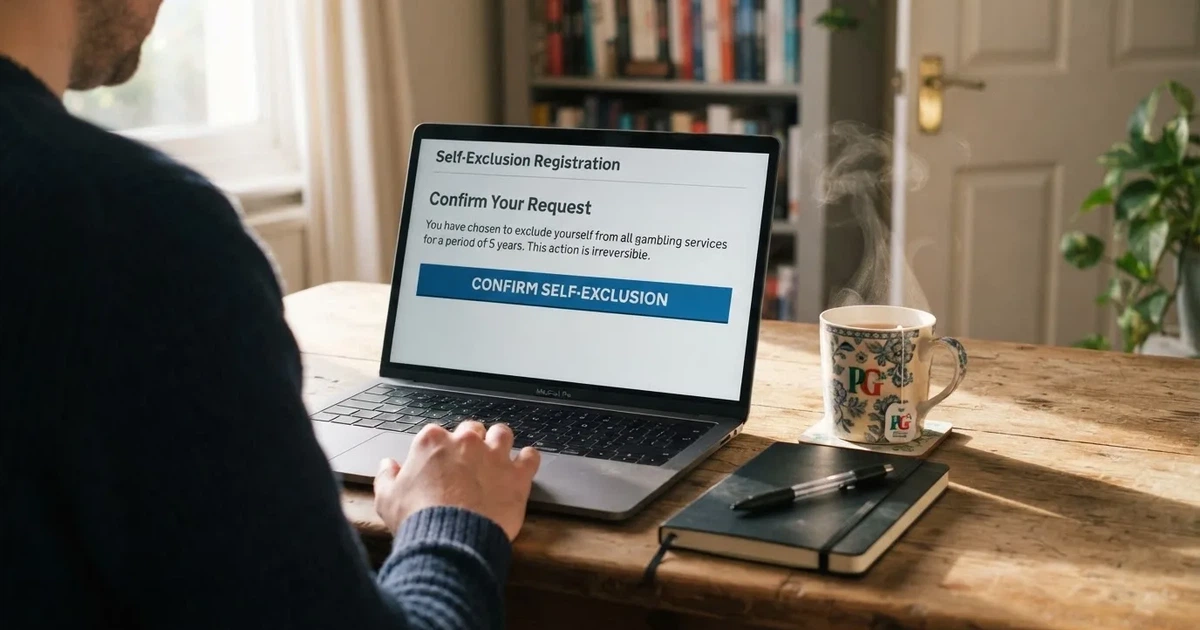
Every Commission licensee must integrate GAMSTOP, the national online self-exclusion scheme, into its registration flow. A player who has signed up to GAMSTOP for six months, one year or five years cannot open a new account at any participating brand for the duration; the period cannot be shortened. The scheme is mandatory at every Commission-licensed online casino, which is to say at every brand in this article and at every other GB-licensed online casino.
Financial vulnerability checks are the newer of the two main protective layers. Since 28 February 2025, operators must run a vulnerability check at £150 of net deposits in a rolling 30-day window using public data only — credit files are not pulled. The check is light-touch by design: it looks at publicly available indicators of financial pressure. The Commission’s wider financial risk assessments, which would use credit-reference-agency data, have been announced but are not yet in force; this article does not treat them as live.
The safer-gambling stack also includes the National Gambling Helpline run by GamCare, the GambleAware website, in-product reality checks, deposit limits the player sets during the prompt required before the first deposit, time-outs of twenty-four hours to six weeks, and self-exclusion at the brand level on top of GAMSTOP. A trusted casino surfaces all of these at the point a player needs them, not buried two menus deep. A casino that hides the safer-gambling page, or that pushes it behind a marketing pitch, is signalling that it considers the page a chore rather than a duty.
What to Do If Something Goes Wrong
A complaint at a Commission licensee can be escalated to an approved alternative dispute resolution (ADR) provider if the operator’s own complaints process does not resolve it within eight weeks. Approved ADR providers are listed on the Commission’s website; they are the route to an independent ruling. If the ADR route also fails, the Commission’s enforcement team can be informed, and the Commission has imposed multimillion-pound fines and removed personal-management licences for repeated breaches. The combination — operator complaints process, ADR, regulator — is what makes the British system worth the licence fee the operator pays.
None of this exists at an offshore site. There is no Commission complaints route, no approved ADR, and no regulator the player can complain to that has power over the operator. That is the practical, day-to-day difference between a GB-licensed brand and one that markets itself as “UK-friendly” from Curaçao.
How the Ten Brands Compare on the Things the Register Actually Shows
The comparison that follows is built from the public register only. It does not include bonus size, RTP figures for individual games, or payout times — research carries no such figures for any of the ten brands. What it does include is the licence holder, the licence number, the register’s record of each domain’s status, and a column reserved for a subject-specific data point the writer chose to surface. That fourth column is empty for every brand here, because research returned no data on the subject key for any of them, and the comparison block is published with its gaps intact rather than padded with figures that came from somewhere else.
| Brand | Licence holder and GB remote casino licence | Domain status on the register | Subject support |
|---|---|---|---|
| MrQ | Tek Fox Ltd — 060629-R-337532-004 | Active | — |
| Betfair | PPB Games Limited — 039411-R-319335-010 | Active | — |
| 32Red | Platinum Gaming Limited — 045322-R-324275-019 | Active | — |
| kwiff | Eaton Gate Gaming Limited — 044448-R-323408-017 | Active | — |
| Midnite | Dribble Media Limited — 042647-R-321653-022 | Active | — |
| bet365 | Hillside (UK Gaming) ENC — 055149-R-331499-004 | Active | — |
| Sky Vegas | Bonne Terre Gaming Limited — 065519-R-339675-002 | Active | — |
| 888casino | 888 UK Limited — 039028-R-319297-014 | Active | — |
| Betway | Betway Limited — 039372-R-319367-029 | Active | — |
| Coral | LC International Limited — 054743-R-330863-014 | Active | — |
The headline read from this table is the licence chain. Each row tells the player who is on the hook if the brand fails — Betway Limited, not Betway Group; Platinum Gaming Limited, not 32Red Plc; LC International Limited, which is the same parent that runs Ladbrokes and Gala Bingo. Two brands can share one licence holder, and that is the point of the register’s structure: it is harder to hide behind a brand when the licensee is named in the same line.
A second read is the suffix. The two-digit suffix on each licence increments when a renewal has taken place. The longer that suffix, the more often the licence has been renewed; very long suffixes suggest a long and unbroken operating history under the same Commission account. Betway’s suffix at 029 is the highest in the table, followed by Midnite at 022 and 32Red at 019 — the older accounts on the list, all of them renewed several times under the same licensee. The shorter suffixes — 002 at Sky Vegas, 004 at bet365, 004 at MrQ — sit on newer accounts where the brand itself is younger or the licence account was created more recently.
MrQ
MrQ’s licence is held by Tek Fox Ltd, a relatively young Commission account at 060629, and the suffix at 004 reflects that. MrQ’s positioning in the British market has been around simplicity and no-wagering free spins, which under the post-19 December 2025 10x cap is now a less differentiated pitch than it was — every Commission licensee is in the same ceiling. The brand’s appeal for a player who values clarity over breadth is the appeal of a Commission account that has not been renewed many times but is, on the public register, in good standing. The narrower game library and the smaller parent company mean less cushion if anything goes wrong, and a player who wants both a brand-new account and a long regulatory track record will not find both here.
Betfair
Betfair sits on a PPB Games Limited licence, account 39411, with a suffix of 010 — a mid-length renewal record that reflects Betfair’s longer history in the British market, first as a betting exchange and then as a casino alongside it. The PPB parentage means the brand shares a regulatory roof with Paddy Power and a wider Flutter Entertainment group; a player who reads licences will note that what they are trusting is the PPB Games Limited account, not the Flutter brand. The casino product is a secondary line behind the sportsbook, and that ordering shows up in the UI.
32Red
32Red’s licence is held by Platinum Gaming Limited, account 45322, with a suffix of 019 — the second-longest renewal record on the table. The brand has been Commission-licensed since the early years of the GB remote regime and has held an unbroken licence since. The licensee is a subsidiary of Kindred Group, but the licence account is the 32Red brand’s own, not shared with Unibet or Maria in the GB register, so the regulatory track record the table shows is genuinely the 32Red one. The long, single-brand Commission history makes this a standout regulatory track record.
kwiff
Eaton Gate Gaming Limited holds the kwiff licence, account 44448, suffix 017 — another mid-table renewal record. kwiff is positioned in the British market as a higher-volatility, surprise-mechanic casino with randomised boosts on each bet. The marketing hooks are louder than at some of the older brands on this list, and the licence account is younger than 32Red’s by a clear margin. The brand pairs its surprise-mechanic product with a Commission account that has seen multiple renewals, though the presentation is far from understated.
Midnite
Midnite is held by Dribble Media Limited, account 42647, suffix 022 — the second-longest renewal record on the table. The brand started in the UK as a sportsbook-first product and has expanded into casino since, and the regulatory track record is the one for the parent, not the casino line specifically. The suffix is long because the account has been renewed many times; the brand itself is younger than the suffix suggests. It is a solid regulatory choice for those prioritizing a long-running account, regardless of the casino’s newer status.
bet365
bet365’s licence is held by Hillside (UK Gaming) ENC, account 55149, suffix 004. The brand’s commercial scale in the British market is larger than every other brand on this table, and the regulatory account is correspondingly newer than some — bet365’s GB-remote footprint was set up under a dedicated account rather than carried over from an older one. The brand’s casino product is one line inside a much larger sports-and-gaming operation, and that scale shows up in the breadth of payment options and the depth of the live-dealer lobby. The extensive resources of the parent operator suggest a highly resilient approach to LCCP compliance across its product lines.
Sky Vegas
Bonne Terre Gaming Limited holds the Sky Vegas licence, account 65519, suffix 002 — the shortest renewal record in the table. The account is new enough that the Commission has renewed it only once, and the brand’s GB-remote casino line is a younger product than the licence suffix on most of the other rows suggests. The licensee is part of the Sky Betting and Gaming group, and a player who knows the brand from television knows the marketing weight behind it; a player who reads licences will note that what they are trusting is a young account, not a long one.
888casino
888 UK Limited holds the 888casino licence, account 39028, suffix 014. The account is one of the older ones on the table and has been renewed several times under the same licensee. The brand has a long GB-remote history and was one of the early entrants to the Commission-licensed casino market; the renewal record is genuinely the 888 account’s own, not shared with a sister brand under the same parent. The product line is broad across slots, live casino and table games, and the regulatory track record is the deepest on the table along with 32Red’s.
Betway
Betway’s licence is held by Betway Limited, account 39372, suffix 029 — the longest renewal record in the table. The account is among the oldest in the GB-remote regime and has been renewed many times under the same licensee, with the regulatory track record genuinely the Betway account’s own. The brand’s casino product sits alongside a sizeable sportsbook, and the casino line has been a Commission-licensed line for almost as long as the GB-remote casino regime has existed. It remains the most compelling option for anyone seeking an extensive, single-brand regulatory history.
Coral
Coral is held by LC International Limited, account 54743, suffix 014. The brand sits alongside Ladbrokes and Gala Bingo under the same licensee, which is the point worth noting: this article treats each brand as it appears on the Commission’s register, and the Commission’s register says all three are run by the same account. The renewal record is mid-table and the licensee is large; a player who values betting-shop heritage and a UK high-street parent reads the row one way, and a player who prefers the regulatory independence of a single-brand account reads it another.
Reading a Licence Number Without Taking Anyone’s Word for It
The Commission’s public register is at gamblingcommission.gov.uk. The page lets a player search by business name, domain or licence number, and it returns a single record per licence with the licensee, the licence type, the licence number, the status, and the domains attached to it. The CSV download is the whole file — every licence, every domain, every status — and is what this article is built from.
A licence number’s structure is fixed: six digits for the account, a hyphen, an “R” for remote, another hyphen, six digits for the licence code, another hyphen, and a two-digit suffix that increments on renewal. Anything that does not match this pattern is not a Commission licence. A licence that begins with the digits 0 and the letter G is a gambling-software permit rather than an operating licence and does not entitle the holder to take customer deposits. A licence that quotes only the suffix without the six-digit account code is quoting a piece of a licence, not the whole thing.
The register’s domain list tells the reader which websites run under a given licence. An Active domain is in commercial use; an Inactive domain is held by the licensee but not currently marketed; a White Label domain trades under the licencee’s authority but is run by a partner that controls the customer-facing brand. The 1065 active and 361 white-label entries on 18 September 2026 are the complete list of websites operating under Commission licences on that date; any site claiming to be Commission-licensed that does not appear in either column is not, and the register is the place to check.
What the Register Does Not Tell You
The register confirms that a licence is held, not that the licence is in good standing in any richer sense. A status of Active means the licence has not been revoked or surrendered; it does not mean the operator has never been fined or is not currently subject to an open regulatory action. For a deeper check, the Commission’s enforcement page lists fines, warnings and licence reviews against named operators; that page is updated as actions close and is the place to look for any brand a player wants to trust with more than a small deposit.
The register also does not list bonus terms, RTP figures for individual games, withdrawal times, payment-method availability or game-volatility classes. Those live in each brand’s published terms, and the only place to find them is the brand’s own site, read with the LCCP and the 10x wagering cap in mind.
Frequently Asked Questions
What makes an online casino genuinely trusted in the UK?
A current operating licence from the Gambling Commission is the necessary condition; the Commission’s public register is the place to confirm it. Beyond the licence, a trusted casino participates in GAMSTOP, runs financial-vulnerability checks at £150 of net deposits in a rolling 30-day window, applies the £5 maximum stake to slots for players aged 25 and over, applies £2 to players aged 18 to 24, and surfaces its safer-gambling pages at the point a player needs them rather than burying them in menus.
How can I confirm a casino is UKGC licensed before signing up?
Go to gamblingcommission.gov.uk and open the public register. Search by the brand’s domain, by the company name, or by the licence number. The entry should match the brand exactly and show a status of Active. If the brand does not appear at all, or appears only as a White Label domain under a different licence account, that is itself an answer — a white-label entry means the customer-facing brand is run by a partner rather than by the Commission-approved licensee.
Does a trusted casino still require ID verification?
Yes. Since 7 May 2019 the Commission has required every licensed operator to verify name, address and date of birth before the first deposit or any play. This is the reason every brand in this article asks for proof of identity at sign-up; an operator that does not is not Commission-licensed, and the absence of a verification step is the loudest single warning sign on the market.
Is GAMSTOP mandatory for every trusted UK casino?
Yes, since 31 March 2020. GAMSTOP is a mandatory condition of every Commission online licence, which is to say every GB-licensed online casino. A player who has signed up to GAMSTOP for six months, one year or five years cannot open a new account at any participating brand for the duration of the exclusion, and the exclusion cannot be shortened.
What should raise doubts about a casino’s trustworthiness?
The absence of a Commission licence number anywhere on the site is the loudest sign. Closely behind it: a Commission licence number that does not match the register, a register entry that is Inactive or surrendered, a credit-card deposit option (banned since 14 April 2020), a wagering requirement above 10x (banned since 19 December 2025), a bonus that bundles a sportsbook free bet with casino free spins (banned mixed-product structure), a missing safer-gambling page, or a missing identity-verification step at sign-up. Any one of these should be enough to walk away.
Written by the editors at trustedcasinocheck.